

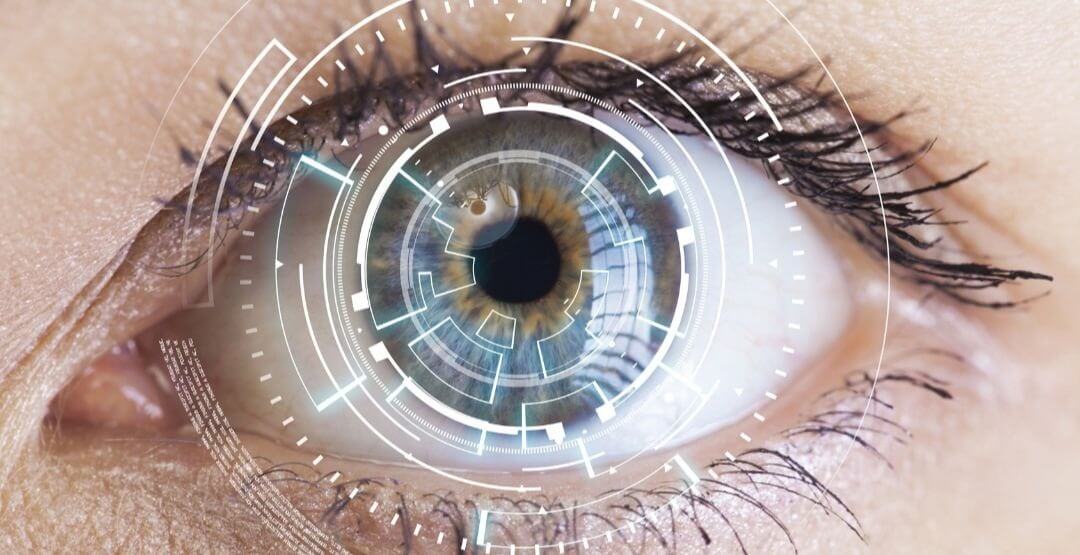
A team of researchers has taken medical robotics to an extreme level of precision. An AI-controlled system was able to perform, in an experimental setting, one of ophthalmology’s most delicate procedures: inserting a needle into microscopic veins of the retina. This breakthrough paves the way for machines to eventually take on surgical tasks that currently challenge even the most experienced professionals.
The technology was developed at Johns Hopkins University and presented in a recent article in the journal Science Robotics. Tests were conducted on pig eyes and combined surgical robots, computer vision algorithms, and deep neural networks. Despite the significant progress, the scientists emphasize that application in human patients is still far off.
Why is this surgery so complex?
The procedure targets retinal vein occlusion, a condition that can cause macular swelling and even permanent vision loss. Currently, the most common treatment requires frequent injections of medication directly into the eye—a method that is invasive, costly, and repetitive.
The researchers’ approach is more direct: deliver the medication precisely into the blocked vein. The challenge lies in the target’s size. Retinal veins measure between 100 and 250 micrometers—smaller than a human hair. Even a nearly imperceptible mistake can compromise the entire procedure.
How does the robot operate at this scale?
To achieve this level of precision, the team used the Steady-Hand Eye Robot (SHER), a surgical robot designed for extremely stable movements. The system integrates surgical microscopy images with intraoperative optical coherence tomography (iOCT) data, providing real-time visualization of the eye’s internal layers.
The AI continuously analyzes this information to guide the needle to the correct vein, touch its wall, perform the puncture, and retract the instrument accurately. While the automated system handles the most critical steps, the human surgeon remains responsible for setting the target and supervising the entire process.
Promising but preliminary results
In initial experiments on 20 immobilized pig eyes, the robot achieved a 90% success rate, correctly delivering the fluid into the vein. Validation was performed both through direct observation and tomographic imaging.
In a more challenging stage, researchers simulated small eye movements similar to those caused by breathing. Even so, in six additional tests, the success rate remained at 83%, considered high for such a sensitive procedure.
Key benefits include eliminating human limitations such as involuntary tremors and providing a depth perception far superior to conventional surgical vision. Continuous internal imaging also allows for fine adjustments throughout the operation.
What still prevents human use?
Despite the encouraging results, the authors urge caution. Tests were conducted only on ex vivo eyes, without real blood circulation, with a limited sample size, and without experiments on live animals or humans.
According to the researchers, the study represents only a first step toward clinical application. Before reaching hospitals and clinics, the technology will require broader validation, testing under real conditions, and rigorous safety evaluations.[wpdiscuz]








 Home
Home  Afiliado
  Anunciar
  Checkout
  Cuenta